Every baby’s hearing,checked early.
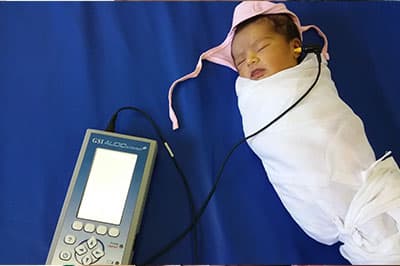
Most babies born with hearing loss look and behave like any other baby. A screen takes a few minutes, doesn’t hurt, and is usually done while the baby sleeps.
How the screen works
OAE screen
A soft probe in the ear canal plays quiet sounds and listens for the inner ear’s echo. It takes a few minutes.
A second look
A ‘refer’ result in the first days is common — often fluid in the ear canal. We simply repeat the screen.
AABR
Small sensors on the head measure the hearing nerve’s response to soft clicks while the baby sleeps.
Diagnosis & support
If a baby still doesn’t pass, a full diagnostic assessment follows — and support can begin in the first months.
The 1–3–6 rule
The international guideline for babies’ hearing — the earlier each step happens, the better speech and language develop.
By 1 month
Hearing screened.
By 3 months
Hearing loss diagnosed, if the screen was not passed.
By 6 months
Support started — hearing aids, therapy and family guidance.
Check again later if…
A passed newborn screen is good news, but some hearing loss appears later. Book a check if your child:
- Has a family history of childhood hearing loss
- Spent more than five days in a neonatal ICU
- Had severe jaundice, meningitis or another serious infection
- Doesn’t startle at loud sounds or turn towards voices
- Isn’t meeting the speech milestones for their age
For hospitals and maternity homes
Shaba runs newborn hearing screening programmes with maternity units: trained screeners, records and — most importantly — follow-up, so no baby is lost between a ‘refer’ result and a diagnosis.
Why every newborn should be screened
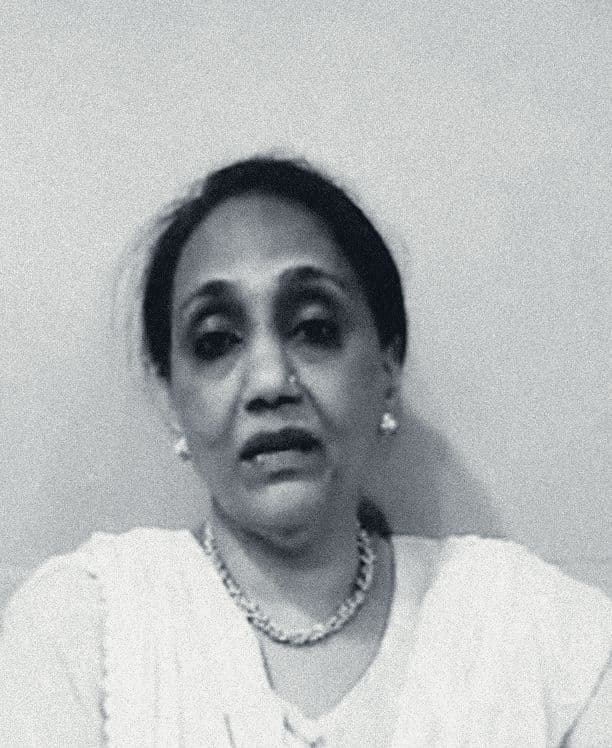
Read the transcript
Hearing loss is a silent and invisible impairment, but it has very far-reaching effects and consequences.
A child with a hearing loss not only has a speech and language delay, but is also delayed in his emotional, social and cognitive skill development. And he also misses the opportunity of mainstreaming in society at an age-appropriate level.
So on this World Hearing Day, we should urge all stakeholders to make newborn hearing screening a mandate in our country — so that every child born is tested at birth, intervention happens at an early stage, and all the milestones are achieved by the child.
Thank you.
Common questions
Does the screen hurt?
No. Nothing goes deeper than a soft earpiece, and most babies sleep straight through it.
My baby was crying — could that affect the result?
Noise and movement can make a screen inconclusive. That’s why we screen when the baby is calm or asleep, and repeat it if needed.
My baby passed. Do we need anything else?
Keep an eye on the hearing and speech milestones as your child grows, and book a check whenever you’re unsure.
Book an appointment
Tell us whatyou’re noticing.
Choose the closest description. We’ll suggest the right first appointment and call you back.