

Overview
Know exactly what you hear — and what to do next.
Audiology evaluation & management
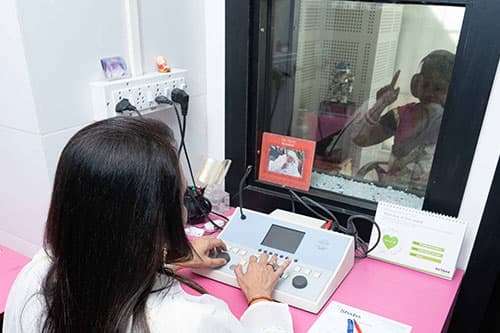
Precise hearing evaluation in Shaba’s own sound-treated room, followed by a plan you understand: fitting, mapping, therapy or simply a date to review.
About audiology at Shaba
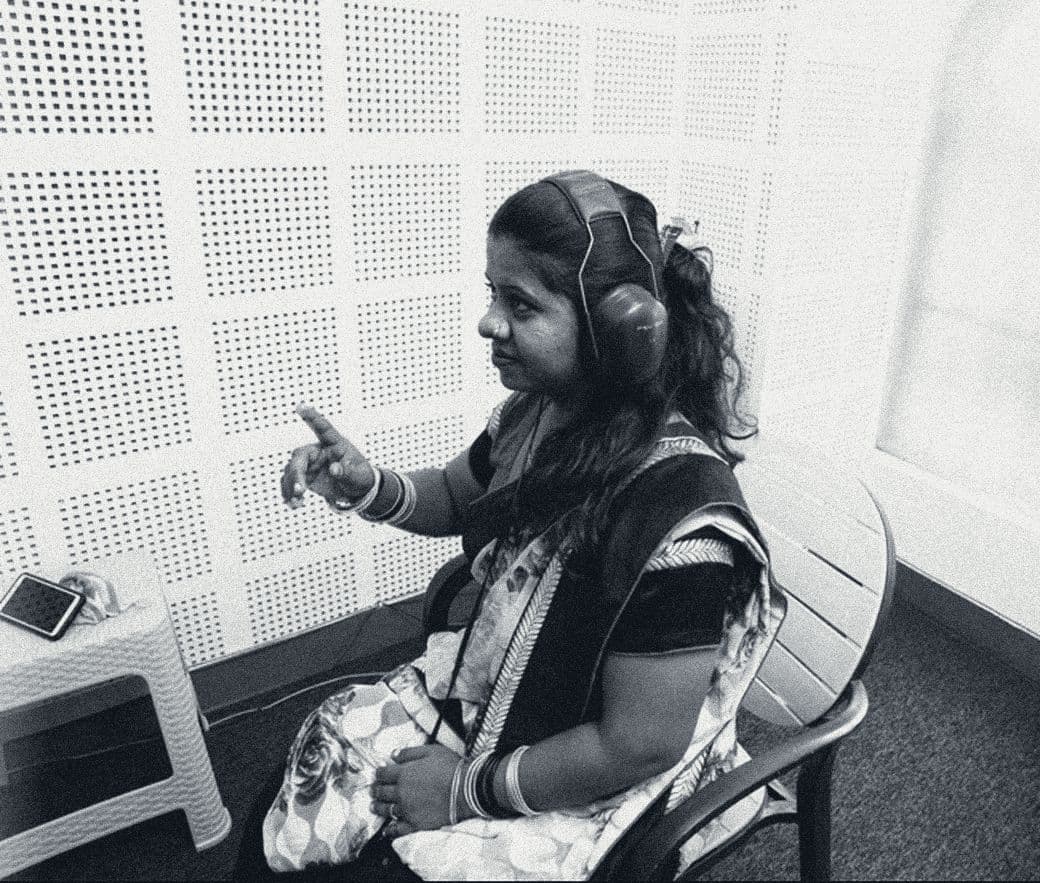
Audiology is the study of hearing, balance and related disorders. At Shaba, an evaluation looks at how each part of the hearing pathway is working — then turns the results into decisions a patient and family can act on.
Who we see
Who this is for
- Adults noticing a change in their hearing, or struggling in background noise
- Newborns and children who need screening or a diagnostic assessment
- People living with tinnitus — ringing or buzzing in the ears
- Hearing-aid, BAHA and cochlear implant users who need ongoing management
Signs
Reasons people book an evaluation
- People seem to mumble, or you often ask them to repeat themselves
- Conversations in restaurants, weddings or traffic are exhausting
- The television is louder than others in the room prefer
- A persistent ringing, buzzing, or pressure in one or both ears
- A newborn did not pass a hearing screen, or a child is slow to respond to sound
What we offer
Tests, therapiesand technology.
The exact plan is chosen after assessment — never applied as a standard package.
Pure-tone audiometry
Finds the quietest tone you can hear at each pitch, from 125 Hz to 8 kHz — the basis of your audiogram.
Speech audiometry
Measures how clearly you understand words, not only whether you hear them.
Immittance (impedance) audiometry
Checks how the eardrum and middle ear respond to pressure and sound.
OAE — otoacoustic emissions
A quick, painless screen of the inner ear, suitable for newborns.
AABR / BERA
Records the hearing nerve’s response to sound — used when a child cannot respond behaviourally.
Cochlear implant candidacy & mapping
Assessment for implantation, then programming of the processor over time.
Hearing-aid fitting & ear moulds
Device selection, custom moulds, fitting and fine-tuning for daily life.
BAHA & assistive listening (FM)
Bone-anchored systems and FM devices where conventional aids are not enough.
Devices
Hearing aids, BAHA and assistive listening devices — fitted, adjusted and supported for as long as you wear them.
Hearing technologyHow it works
Four steps,one team.
Conversation
We start with what you or your family have noticed, your history, and the places where listening is hardest.
Measurement
Tests are chosen for the person — a newborn screen is very different from an adult’s full evaluation.
Explanation
You see your audiogram, in plain language, with time for every question.
Management
Fitting, mapping, therapy, referral or review — agreed together, followed up by the same team.

In their words
“I have been consulting Dr. Jagmaag for more than five years for my hearing issues. By patiently explaining my problem, she also explained how to cope with my hearing loss, apart from the treatment.”
Questions
Before yourfirst visit.
What are common signs of hearing loss in adults?
Straining to follow conversations, difficulty in background noise, asking people to repeat themselves, turning the TV up, trouble on the phone, ringing in the ears, or hearing better on one side. Any of these is a good reason to book an evaluation.
Why does early hearing assessment matter for children?
Hearing plays a huge part in a child’s emotional, social and intellectual development. Early identification and treatment can put a child’s progress on par with their hearing peers. A newborn hearing screen helps avoid unnecessary delays.
Do you treat tinnitus?
Yes. Audiologists assess tinnitus — ringing or buzzing in the ears — and recommend management based on your hearing results and how the tinnitus affects daily life.
Will I be told to buy a hearing aid?
Not automatically. Recommendations follow the results. Sometimes the right next step is monitoring, a medical referral or therapy rather than a device.
Book an appointment
Tell us whatyou’re noticing.
Choose the closest description. We’ll suggest the right first appointment and call you back.